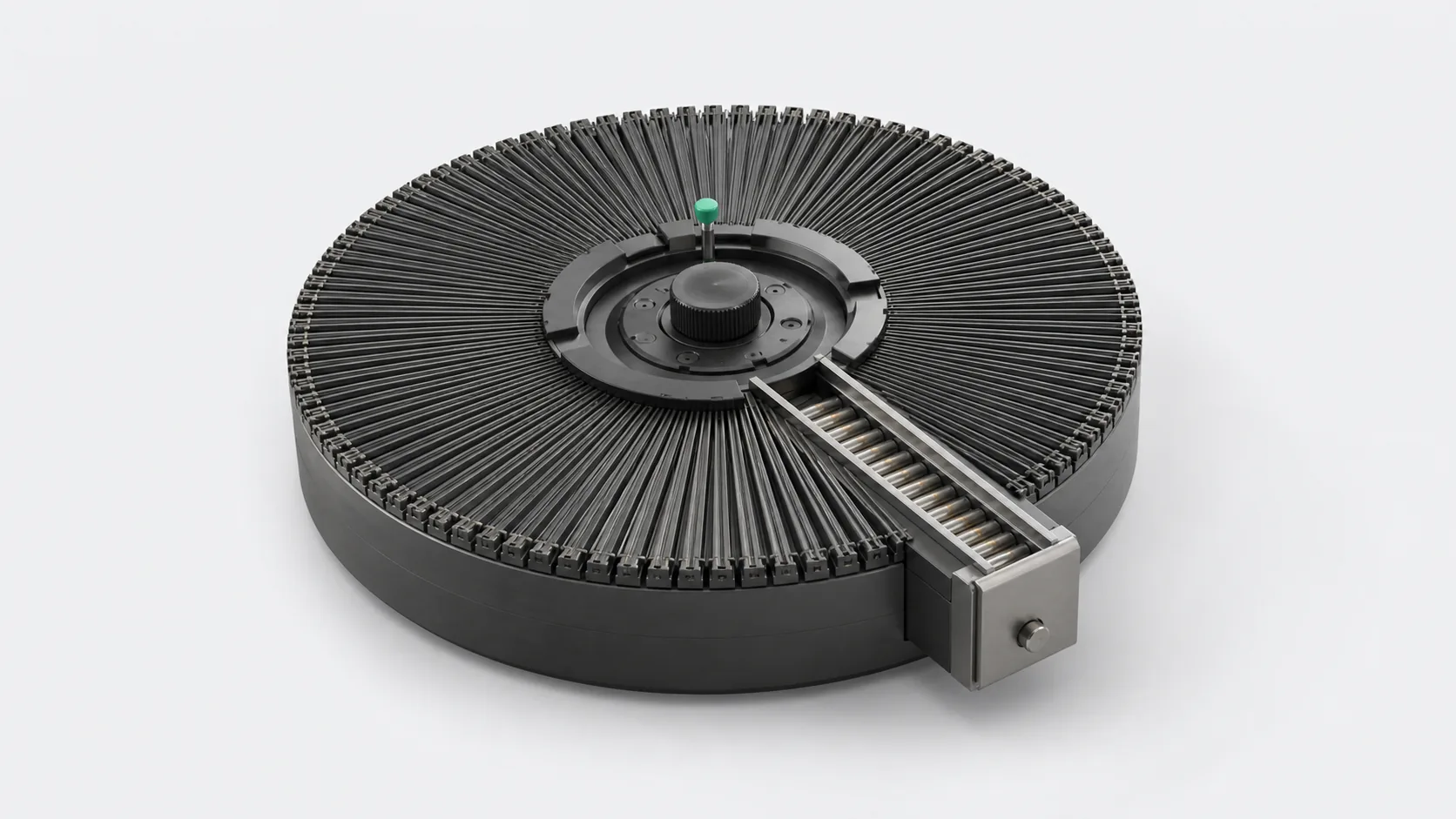
A large pattern library matters only when the current market makes one part of it relevant
The first scanner celebrated every match. That was useful in development and exhausting as a product.
Once several markets and related range sizes were moving together, the screen filled with evidence that the computation worked. It did not tell a person what deserved attention. The pattern research had outgrown the interface built to inspect it.
A library is not a menu
Pattern research explores many possible relationships between ranges. The live market makes only a small part of that work relevant at any moment.
This changed the research question. We stopped asking how to display the library and asked how current state should enter it. The interface did not need a catalog. It needed a clear account of the condition that was present, tied to the market and preferences that made it worth surfacing.
The shift sounds subtle. It separates research scale from interface scale. We can test broadly without asking a person to browse every possibility. The screen can stay quiet until current movement creates a useful point of contact.
Recognition is a claim about the present
A pattern match says two things: a defined structure exists in the research, and the current range state resembles it closely enough to inspect. That is already a meaningful claim. Adding a guaranteed future direction would exceed the evidence.
This boundary influences the public language. We use “condition,” “match,” and “hint” because they describe what happened. We avoid verbs that turn recognition into instruction.
It also influences design. The event needs enough context to be questioned. Which market is involved? What did the user choose to monitor? Is the condition fresh, continuing, or historical? The interface should make those answers available without unfolding the whole research environment.
The interface provides another form of resistance. A research result may be precise inside a report and impossible to explain in a compact product view. That friction is useful. If we cannot state why a condition surfaced without relying on hidden confidence or a vague score, it is not ready for a Hint. Product language becomes part of the review.
Research needs resistance
Large search spaces produce coincidences. A team can always find a pattern that looks persuasive after the path is complete. The work becomes useful when it survives constraints outside the discovery process.
Replay is one of those constraints. It lets recorded history arrive one event at a time through a model shaped like the live system. A pattern that depends on future context becomes harder to defend. A condition that behaves differently across environments becomes a reason to investigate.
Rejection keeps the library honest. Some ideas remain research artifacts. Some narrow into a more precise condition. A smaller set reaches the interface, where the wording and interaction impose another standard: can a person understand why this surfaced without mistaking it for certainty?
Patterns at the live edge are useful because most of the library remains quiet. The present market chooses the small portion worth bringing into view.