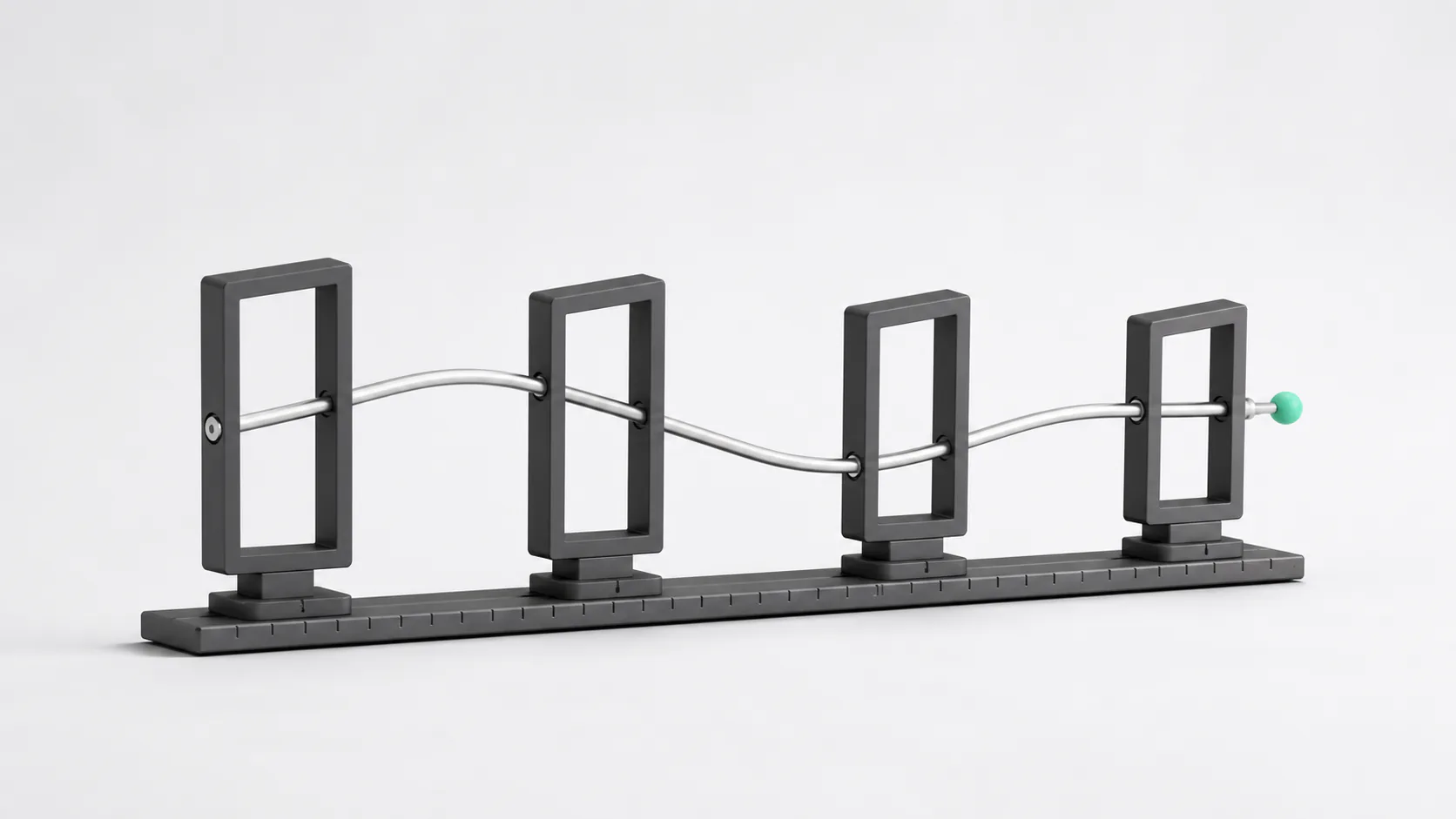
The line view keeps range structure while making changes easier to follow
The first box display made range state visible and asked the eye to do too much at once.
Several rectangles could overlap. Each size carried context. A person who already understood the construction could read the relationships. A new user often saw a stack of shapes before they saw movement.
In September 2024, we drew a line through the same range history.
The alternate view kept the source
The important decision came before the styling: Line would read the ResoBox state rather than calculate a competing version of the market.
That kept the disagreement where it belonged. Box and Line could emphasize different relationships, but they could not quietly define direction in different ways. If the two views appeared to conflict, we had a specific behavior to inspect.
The first version proved the trace. Later work connected the following line to the correct edge of the smallest box and improved how the current position sat against the history. These details made the line feel attached to the live range instead of drawn over it.
Simple is a visual decision
A line chart can become dense through accumulation. Mark every event. Add several scales. Keep the hover active everywhere. Pull the viewport with each update. The familiar shape does not guarantee a calm reading.
We wanted the line to carry less visual weight than the boxes. Current state needed a clear place. Older structure could recede. Movement and turning points should appear before controls or annotations.
The view became an accessibility layer for the model. Someone could follow direction as a continuous trace, then return to the Box view when nested ranges mattered more.
Following the live edge created its own tension. The line should keep current movement available while a person is watching it, but a hover over history should not be dragged forward by the next update. Later views inherited the same lesson: live follow is a mode, and inspection has to be allowed to interrupt it.
One model can have several entrances
The line established a principle that later shaped 3D and Ryver: a new visualization should reveal a relationship, not invent a new market underneath it.
Box shows the present relationship between related ranges. Line makes continuity easier to follow. Ryver gives completed movement a horizontal sequence. 3D explores depth between scales. Each view earns its place by changing the question the picture answers.
People do not all build understanding from the same shape. Offering more than one entrance makes the range model easier to learn, provided every entrance leads back to a shared definition.
The first line did not replace the boxes. It proved they could speak in another accent.