The August 2026 rebrand gives two years of product decisions a clearer voice
Open the old home page beside the live software and the mismatch is immediate. The page presents a set of separate features. The software presents one connected way of seeing a market.
That gap is the reason for this release. The new identity does more than change a mark or a palette. It gives two years of product decisions a clearer frame, from the first fixed-range box to the market dashboard, Ryver, Trend Hints, Learn, and an experimental local Trade terminal.
A product made from related decisions
The first ResoBox asked whether price movement could remain legible without letting a clock interval define every shape. The dashboard extended that question across several markets. Line and Ryver offered different ways into the same range history. Trend Hints gave the software a small, useful memory: watch the conditions a person chooses after they leave the screen.
None of those decisions began as branding. Together, they formed a point of view.
We believe a serious market tool can be calm. A view can reveal complexity without making operation confusing. Learning can explain the objects on screen without building a cult of expertise around them. Automation can state its limits in plain language. The workspace should reward closer observation, not constant attention.
The previous site had pieces of that idea, though it rarely connected them. A reader could leave knowing that boxes, courses, and signals existed without understanding why they belonged together. The new story begins with the relationship.
The interface carries the argument
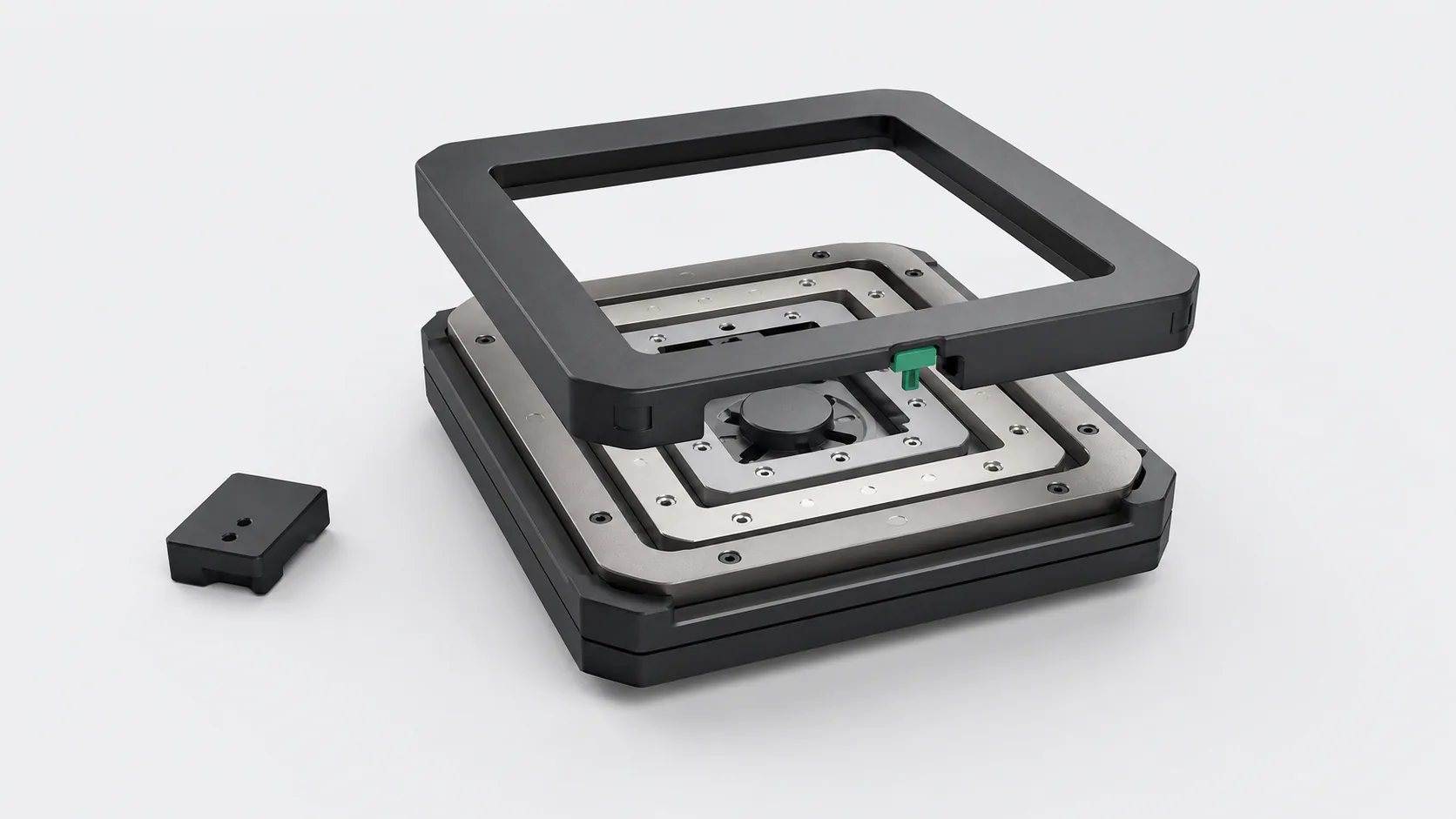
The visual system comes from the objects themselves. Plates hold market state. Rails connect related ranges. Selectors expose deliberate choices. A small green signal marks activity; it does not wash every surface in brand color. Graphite and aluminum keep the frame quiet enough for movement to matter.
Those details repeat across the site because they teach the same interaction language. A person who understands one market card should recognize the same hierarchy in a detailed view. A lesson should use the object it explains. A status control in Trade should feel related to the rest of the interface even though the consequences are more serious.
Consistency also makes disagreement easier to see. If one view implies something the others do not, the interface should help us find the mismatch rather than disguise it with a different visual grammar.
The old language hid the sequence
The earlier story also flattened time. It showed a finished collection without revealing how one decision created pressure for the next.
The first box made fixed-range movement visible. Repeating the box across a dashboard made comparison possible and exposed the need for stable settings. A live connection made the dashboard responsive and exposed the harder problem of returning after interruption. Pattern research created many observations and forced us to decide which ones deserved a person’s attention. Replay grew from the gap between a convincing finished chart and a model that had to encounter history in order.
That sequence matters because it keeps the story from sounding inevitable. Several features began as corrections to an assumption that did not survive use. The line view exists because boxes are not the easiest entrance for every person. Ryver exists because a current-state picture does not make sequence obvious. Learn exists because a visual language has to teach itself directly.
The identity needs room for those corrections. A brand built around one feature would force every later decision to orbit the first release. A brand built around “intelligence” would encourage stronger claims than the evidence supports. We chose a quieter center: observe market structure, keep the state coherent, and give people several ways to read it.
Clear limits belong in the story
Trading products often fill uncertainty with confident language. We would rather describe the boundary of each tool.
Trend Hints identify conditions that match a user’s preferences; they do not predict an outcome. Learn explains the range model and the controls built around it; it cannot replace independent judgment. Trade is experimental, local, demo-first, and supervision-sensitive. A compiled terminal does not make live execution harmless.
These limits do not weaken the tools. They tell people what kind of attention each surface deserves.
A public record should show its work
The rebrand also changes how we publish. A changelog entry will record what shipped, when it changed, and the visible consequence. A journal article will have more room for the pressure behind the decision, including the bugs and failed assumptions that made the final rule clearer.
Each article will carry its own mechanism instead of a reused “live stream” graphic. If the story is about replay, the motion should show future context remaining unavailable. If it is about a fixed range, price should have to cross the boundary before the box completes. The visual should teach the argument in a few seconds or it should not be there.
That standard gives the public story a useful job. It is not a polished mirror held up after the work. It is another place where we have to state what we actually ship.
The identity will keep developing with the software. The journal will cover the decisions behind each view, including the attempts that exposed a better question. The changelog will keep a plainer record of what shipped and what changed. Both begin with the same promise: describe the software in front of us, in language a person can actually use.